
A not so new approach to a week off…
In recent years the need for a week (or sometimes longer) off training, in order to allow yourself to recover has received a lot of attention. Considering that a large percentage of people who exercise do not train for sports performance or even a very specific goal, is there really a need for the average gym user to have what is known as a de-load week?
It is assumed in athletic populations that some form of periodised plan is being followed in relation to competitive events and seasons. Here the purpose of the de-load week is often used to encourage peaking – that is where a certain or multiple qualities that have been trained can recover enough to see an improvement. Neglecting this is why many people fail to progress beyond their initial adaptation to training as a beginner. Firstly what is periodisation? Secondly, at what point should they look to recover/de-load and why?
In answer to the first point, periodisation, in its simplest form is the method of planning different training phases around key events over a set period of time. This could be a typical macrocycle of a year (an Olympic macrocycle would be 4+years), or a shorter term known as a mesocycle (usually 3-6 months). This will be made up of different training blocks known as microcycles (1-6 weeks being the norm). Even when not training for a sport, you will generally (or should) have an idea of what you want to achieve and by when. This is the basis of your periodisation. The more detail you can put into this plan the better, and the better the results tend to be.
The de-load now comes into play, where different types of training require different approaches as well as differing volumes of work. The de-load week should be specific to the qualities you feel should get the recovery, based on the preceding training phase. For example, if training for max strength, typically you will use higher relative intensities but lower relative volumes, so what needs to recover should be the CNS? Yes is the simple answer. More complexly, the Central nervous system which took a battering from all those heavy loads does need to recover, but lowering the intensity in your de-load week may not be the best approach. Lowering the volume of work through decreasing sets – and maybe even repetitions – should still allow the CNS enough stimulus to improve strength, whilst reducing stress on joints, passive structures and musculature.
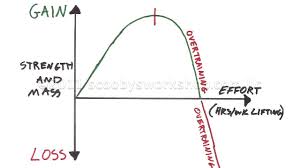
So when is lowering the intensity the right option? By periodising well, according to the individual, the variations in relative intensity due to switching between training for multiple goals will allow for adaptation. Possibly the only exception to this rule is if you notice serious fatigue, approaching ‘burn out’. Rarely will you over-train, more commonly people ‘under-recover’ but a well thought out and properly planned training programme should allow for recovery as much as it plans for improvement. A solid training schedule will have a structured undulation of relative volume and intensity with built in de-load weeks. The best plans will also allow for holidays and off weeks and incorporate them so you can rest guilt free.
Article by Alex Adams
 Our passionate, knowledgeable and friendly team will use innovative and sometimes surprising techniques to get you there faster. Combining the best in personal training and rehab in one clinic, our team of ex-athletes and strength & conditioning trainers give you advice and use equipment that’s the preserve of elite athletes.