
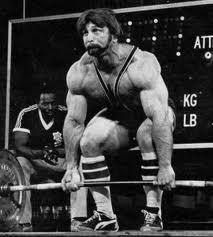
Strength training is arguably a very simple process – IF you’re a noob. To someone who has never done any kind of formal training, standing up from a chair repeatedly can make you stronger. For a while. Once your body has adapted to a stressor and can manage the same task with lower relative effort, you have to keep applying more or different stress in order to see continued adaptation. This is the principle of overload – a stimulus must increase over time to see progression. The SAID principle means that the stimulus must also be designed to challenge the quality you want to enhance (Specific Adaptation to Imposed Demands). Now you know roughly what you must do, here are 5 key points to ensuring your strength training meets these requirements…
Key 1: Have a plan. The internet is a wonderful thing, where an abundance of knowledge can be sifted through with a single click. If you don’t have a coach to write you a personalised, goal driven plan (which I suggest you do at least for a couple of months – contact us here), then do some research based on what you want to achieve. There will undoubtedly be someone who knows more than you who also wanted to achieve similar things. Chances are they kindly wrote and then shared that blueprint of exactly how they got there. Stop dicking about and follow the map. Stop changing your mind, or worse, changing the plan. If in 4 weeks you’re not convinced it’s effective then you’ve learnt some valuable lessons and are better prepared for the next one.
Key 2: Write everything down. Keep a training log of each and every set and rep. I forget who said “the dullest of pencils is clearer than the sharpest of memories” but it holds true. If you don’t know how many reps you did on your 4th set of squats last week, how do you know if you’re truly sticking to the overload principle?
Key 3: Sort your brain out. Focus and drive are key to lifting a lot of weight. This is hard to do on an empty stomach. Harder still when you’ve loaded up on carbs and your body is crying out for a nap. Plan your pre training meal well – protein, some good fats, little carbs – and think about which supplements work for you. A strength session doesn’t require a muscle pump so I’d leave the pre-‐ workouts alone. An espresso and some beta-‐alanine work great for me, add a handful of almonds if you’ve not eaten in the preceding two hours.
Key 4: Take your rest periods, but don’t take the piss. When working above 80% of your maximum it’s likely that you’ll need upwards of 3 minutes to fully recover. The higher the %1RM, the more rest is required. BUT this doesn’t mean a 5 minute chat between every set. Full recovery isn’t always required, the same way full exhaustion isn’t always required. Be sensible about your rest periods and see how long you actually need to keep the intensity up.
Key 5: Get uncomfortable. The reason it’s called a ‘stressor’ is that it should challenge your abilities. Be prepared to get a little dirty. The sets that make you stronger will be the ones that don’t feel easy, that push you beyond what you’ve experienced before and make you fight to grind it out. You can’t progress without leaving your comfortable little world were you smash every set. Sometimes a workout should make you question your sanity.
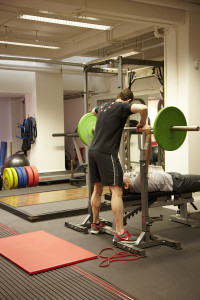
 Our passionate, knowledgeable and friendly team will use innovative and sometimes surprising techniques to get you there faster. Combining the best in personal training and rehab in one clinic, our team of ex-athletes and strength & conditioning trainers give you advice and use equipment that’s the preserve of elite athletes.